To the Liars, lawyers, corrupt federal judges, and Supreme Court traitors, I hope you find this one interesting, I’m sure you’ll be seeing much of this information presented again in another lawsuit. Knowing the depth of your insidious hypocrisy I expect only to continue my story by filing. Given your prior track record for criminally and corruptly ignoring the law, I would further expect no viable reasonable argument on your part as you have already demonstrated your inability, unwillingness, and pathetic dodging of facts and precedent. Hey! Just too bad if you can’t handle the TRUTH like men!
If you’re just a reader or follower I apologize for all the legal stuff in this one. There will be a lot of quoting and citations again a bit more than normal. However, this article and the others should concern all Americans. The law, the constitution, and the foundations of our freedom have been heinously breached. We the people are under tyranny, oppression, and repression from a despotic oligarchy aided and abetted by a corrupted federal judiciary.
A Visit with RICO:
Robert Blakey was an adviser to the United States Senate Government Operations Committee, under the close supervision of the committee’s chairman; Senator John Little McClellan drafted the racketeer-influenced corrupt organizations act “RICO’. It was enacted as Title IX of the Organized Crime Control Act of 1970.
In a brief of amicus curiae by the national association of Shareholder and consumer attorneys ’NASCAT’ in support of respondent ‘United States Of America’ G. Robert Blakely presented the following argument in the case of Edmund Boyle v. United States of America on pages 3-5 of his brief.
“To state liability for a claim under Section 1962(c), the Government or a civil RICO plaintiff must allege “(1) conduct (2) of an enterprise (3) through a pattern (4) of racketeering activity.” Sedima, S.P.R.L. v. Imrex Co., 473 U.S. 479, 496 (1985); accord Odom v. Microsoft Corp., 486 F.3d 541,547 (9th Cir.), cert. denied, 128 S. Ct. 464 (2007). The necessary elements for liability for a criminal RICO conviction are the same. See, e.g., H.J. Inc. v. Northwestern Bell Tele. Co., 492 U.S. 229, 236 (1989) (“pattern” element “appl[ies] to criminal as well as civil applications”); accord Sedima, 473 U.S. at 489 (“violation”).The only question presented in this appeal is the second element – “enterprise” – of a Section 1962(c) criminal prosecution or civil claim when based on an “association-in-fact” theory The definition of “enterprise” in RICO is straight forward. In its entirety, the definition is: “ ‘enterprise’includes any individual, partnership, corporation, association, or other legal entity, and any union or group of individuals associated in fact although not a legal entity.” 18 U.S.C. § 1961(4) (emphasis added). As is evident from the plain text, this definition is hardly demanding. A single “individual” is an enterprise. Similarly, a single “partnership,” a single “corporation,” a single “association,” and a single 4 “other legal entity” are enterprises. See Odom, 486 F.3d at 548. This Court admonishes courts to construe RICO and, in particular, “enterprise” expansively. See National Organization for Women, Inc. v. Scheidler, 510 U.S. 249, 257 (1994) (“NOW”) (“RICO broadly defines ‘enterprise’ ”); United States v. Turkette, 452 U.S. 576, 586-587 (1981); Sedima, 473 U.S. at 497-98. With few exceptions, the circuit courts of appeals adhere to this admonition. See, e.g., City of New York v. Smokes-Spirits.Com, Inc., 541 F.3d 425, 447 (2d Cir. 2008); Odom, 486 F.2d at 547; United States v. Cianci, 378 F.3d 71, 78-79 (1st Cir. 2004); United States v. London, 66 F.3d 1227, 1243-1244 (1st Cir.1995), cert. denied, 517 U.S. 1155 (1996); United States v. Lee Stoller Enters., Inc., 652 F.2d 1313, 1318 (7th Cir.), cert. denied, 454 U.S. 1082 (1981). Congress gave the term great flexibility by using the word “includes” rather than “means”; thus, its definition is illustrative, not exhaustive. See United States Masters, 924 F.2d 1362, 1366 (7th Cir.) (Posner, J.),cert. denied, 500 U.S. 919 (1991); United States v.Perholtz, 842 F.2d 343, 353 (D.C. Cir.), cert. denied, 488 U.S. 821 (1988). Accordingly, courts properly interpret “enterprise” to include (1) legal entities, that is, legitimate business partnerships or corporations, and (2) illegitimate associations-in-fact, marked by an ongoing formal or informal organization of individual or legal-entity associates, see Cianci, 378 F.3d at 79,who or which function as a continuing unit “for a common purpose of engaging in a course of conduct.”5Turkette, 452 U.S. at 580-583; see also United StatesPatrick, 248 F.3d 11, 19 (1st Cir. 2001), cert. denied, 535 U.S. 910 (2002).”
See the following link for the complete text:
http://www.wilentz.com/files/articlesandpublicationsfilefiles/134/articlepublicationfile/edmund%20boyle%20v.pdf
This argument makes these primary points.
- An enterprise can be an association of any union or group of individuals associated in fact although not a legal entity.
- The Supreme Court has admonished courts to construe RICO and in particular “Enterprise” expansively.
- With few exceptions, the circuit courts of appeals adhere to this admonition.
- Congress gave the term great flexibility by using the word “includes” rather than “means’; for the purpose of illustration and not as an exhaustive list. Who would no more about this than the lawyer involved in writing the legislation? Also, Consider whom he is arguing for.
When it came to using RICO for the prosecution of a Government Agency Mr. Blakey made the following arguments on behalf of the United States of America.
“ Finally, a principal and wholely [sic] proper use of RICO by the Government is to prosecute political corruption cases where the enterprise is usually defined as the governmental agency, political office, and the like. See G. Robert Blakey & Thomas Perry, An Analysis of the Myths That Bolster Efforts to Rewrite RICO and the Various Proposals for Reform: “Mother of God is This the End of RICO?, ” 43 VAND .L. REV.851, 1020 (1990) (reporting that the largest category of criminal RICO prosecutions involved political corruption). See, e.g.,United States v. McDade,28 F.3d 283, 295-297 (3d Cir. 1994) (upholding association-in-fact RICO enterprise consisting of congressman, his two offices and congressional sub-committees that he chaired), cert. denied , 455 U.S. 910 (1982); United States v. Dischner, 974 F.2d 1502, 1511 (9th Cir. 1992) (upholding association-in-fact enterprise consisting of municipal officials, office of mayor and department of public works), cert. denied,507 U.S. 923 (1993); United States v. Angelilli,660 F.2d 23, 31-33 (2d Cir. 1981) (“We view the language of § 1961(4), . . . as unambiguously encompassing governmental units, . . . and the substance of RICO’s provisions demonstrate a clear congressional intent that RICO be interpreted to apply to activities that corrupt public or governmental entities.”), cert. denied, 455 U.S. 910(1982);see also G. Robert Blakey, The Civil RICO Fraud Action in Context: Reflections on Bennett v. Berg, 58 NOTRE DAME L. REV. 237, 298-299(1982) (collecting decisions). In Cianci, 378 F.3d at 78-88, where the First Circuit affirmed the RICO convictions of the mayor of Providence, Rhode Island, and associates who operated affairs of an associated-in-fact enterprise consisting of themselves, the city and its agencies and entities to enrich themselves, the court stated that “[a] RICO enterprise animated by an illicit common purpose can be comprised of an association-in-fact of municipal entities and human members when the latter exploits the former to carry out that purpose.” Id. at 83. After surveying the above-referenced decisions from the Second, Third and Ninth Circuits, the First Circuit stated: “In each of these cases, the groupings of individuals and corporate or municipal entities were sufficiently organized and devoted to the alleged illicit purposes that the resulting whole functioned as a continuing unit. The common purpose was dictated by individuals who controlled the corporate or municipal entities’ activities and manipulated them to the desired illicit ends.” Id. RICO’s important role in combating political corruption would effectively end if this Court were to accept Petitioner’s attempts to narrow the broad definition of “enterprise” found in section 1961(4) and explicated in Turkette.
See pages 29-30 of the brief available for review at this link.
http://www.wilentz.com/files/articlesandpublicationsfilefiles/134/articlepublicationfile/edmund%20boyle%20v.pdf
The following points can be taken literally from this argument made on behalf of the United States Government:
- A principal and wholely {sic} proper use of RICO to prosecute political corruption cases where the enterprise is usually defined as the governmental agency, political office, and the like.
- The largest category of criminal RICO prosecutions involved political corruption.
- The Supreme Court in Angelilli viewed the RICO language as unambiguously encompassing governmental units.
- The Supreme Court found the substance of RICO’s provisions demonstrates a clear congressional intent that RICO be interpreted to apply to activities that corrupt public or governmental entities.
- A RICO enterprise animated by an illicit common purpose can be comprised of an association-in-fact of municipal entities and human members when the latter exploits the former to carry out that purpose.
- RICO’s important role in combating political corruption would effectively end if the Supreme Court were to accept attempts to narrow the broad definition of “enterprise” found in section 1961(4) and explicated in Turkette.
- The RICO act was used to prosecute a congressman and two of his offices, a congressional sub-committee, an enterprise of municipal officials, two mayors, a department of public works, and yes even the State of Illinois.
- RICO’s important role in combating political corruption effectively ends when the court chooses to narrow the broad definition of “enterprise”.
In another case following Mr. Blakey’s: United States v. Warner, 498 F.3d 666, 694-97 (7th Cir. 2007), the Seventh Circuit held that the “State of Illinois was properly charged as the RICO enterprise. See the previous blog post for more on this case.
Mr. Blakey made the following argument on behalf of the United States of America on pages 5-7 in the text body.
Text Body.
“This Court more than a quarter-century ago in Turkette, 452 U.S. at 580-593. Carefully examining RICO’s language (id. at 580-587), legislative history (id. at 588-593), and purpose (id. at 593), this Court – with a lone dissent – articulated the evidentiary criteria for an associated-in-fact enterprise under RICO. To establish (“prove”) the existence of such an enterprise at trial, the Government (or civil RICO plaintiff) must offer “evidence of an ongoing organization, formal or informal,” and “evidence that the various associates function as a continuing unit.” Id. at 583. This Court required no other evidentiary showing. See id.; see also City of New York, 541 F.3d at 447; Odom, 486 F.3d at 552.3 As set forth herein, the majority of the circuits faithfully adhere to the criteria enumerated in Turkette, 452 U.S. at 583. In practice, the dual requirements of (1) distinctness and (2) the proof needed to demonstrate an associated-in-fact enterprise “work in tandem to weed out claims dressed up as RICO violations but which are not in fact.” City of New York, 541 F.3d at 447. The “distinctness” requirement requires the Government or civil RICO plaintiff to allege and prove at trial that the RICO “person” is legally separate from the RICO “enterprise,” while the “association-in-fact” requirements ensure that “distinctness” is not achieved by simply adding on entities to the enterprise that do not in fact operate as a “continuing unit” or share a “common purpose.”Id. (quoting Turkette, 452 U.S. at 583). Anything more is superfluous.”
From the text body of Mr. Blakey’s brief in support of the United States Government we can conclude the following facts:
- The Supreme Court articulated the evidentiary criteria of an associated-in-fact enterprise under RICO in Turkette, 452 U.S. at 580-593.
- The distinctness requirement requires a plaintiff to allege and “Prove at Trial” the RICO person is legally separate from the RICO “enterprise”
In the Footnotes from these same pages, Mr. Blakey noted the following:
“In Turkette, 452 U.S. at 583, this Court spoke repeatedly of what must be “proved” at trial – not what must be alleged or pled. See id. (referring to what “the Government must prove”; “proved by evidence”; “proof used to establish”; “proof of one”; and “must be proved by the Government.”). Id. (emphasis added; footnote omitted); see also United States v. Nascimento, 491 F.3d 25, 32 (1st Cir. 2007) (quoting Turkette), cert. denied, 128 S. Ct. 1738 (2008); United States v. Riccobene, 709 F.2d 214,222 (3d Cir.), cert. denied, 464 U.S. 849 (1983). Turkette says nothing about what must be alleged by the Government or civil RICO plaintiffs.Consistent with Rule of Civil Procedure, the pleading stage should offer a “low hurdle” to clear. City of New York, 541 F.3d at 449; see also In re Sumitomo Copper Litig., 104 F. Supp. 314, 319 (S.D.N.Y. 2000) (Pollack, S.J.) (“Allegations of the existence of a RICO enterprise must meet only the ‘notice pleading’ requirements of ” Rule 8(a) (citations omitted)). Nevertheless, district courts “confuse [ . . . ] what must be pleaded with what must be proved,” ignoring that “[i]t is the function of discovery to fill in the details, and of trial to establish fully each element of the cause of action.” Seville Indus. Mach. Corp. v. Southmost Mach. Corp., 742 F.2d 786, 790 (3d Cir. 1984), cert. denied, 469 U.S. 1211 (1985). As Judge Posner recognized in Limestone Devel. Corp. v. Village of Lemont,520 F.3d 797, 805 (7th Cir. 2008), civil RICO plaintiffs may “conduct discovery” to flesh out their evidentiary showing of an association-in-fact. See also Dubai Islamic Bank v. Citibank,N.A., 126 F. Supp. 2d 659, 671 (S.D.N.Y. 2000) (“not always . . .reasonable to expect . . . when a defrauded plaintiff frames his complaint he will have available sufficient factual information regarding the inner workings of a RICO enterprise”). Expecting the pleader to allege pre-discovery what he, she, or it can only obtain in discovery is a classic “Catch-22.” See Joseph Heller, CATCH-22, 47 (Dell 1985) (“He would be crazy to fly more missions and sane if he didn’t, but if he was sane he had to fly them. Yossarian was moved very deeply by the absolute simplicity of [the Catch-22.] ” ) . In cases alleging violations of § 1962(c), the Government and civil RICO plaintiffs must “allege and prove the existence of two distinct entities: (1) a ‘person’; and (2) an ‘enterprise’ that is not simply the same ‘person’ referred to by a different name.” Cedric Kushner Promotions, Ltd. v. King, 533 U.S. 158, 161-162 (2001). A “person” is “any individual or entity capable of holding a legal or beneficial interest in property.” 18 U.S.C. § 1961(3). Thus, “by virtue of the distinctness requirement, a corporate entity may not be both the RICO person and the RICO enterprise under [§] 1962(c).” City of New York, 541 F.3d at 447 (citation omitted). Nevertheless, “a defendant can clearly be a person under the statute and also be part of the [association-in-fact] enterprise,” because the “prohibition against the unity of person and enterprise applies only when the singular person or entity is defined as both the person and the only entity comprising the enterprise.” United States v. Goldin Indus., 219 F.3d 1271, 1275 (11th Cir.) (collecting cases), cert. denied, 531 U.S. 1015 (2000); see also Securitron Magnalock Corp. v. Schnabolk, 65 F.3d 256, 263 (2d Cir. 1995) (notwithstanding common ownership and a common officer and agent, each distinct corporation could be charged individually as a “person” under § 1962(c) while also being considered jointly as constituting the “enterprise”), cert. denied, 516 U.S. 1114 (1996). “
From Mr. Blakey’s footnote in this case one can conclude:
- There is significant precedent to support, the existence of a RICO “enterprise” must be proven at trial but, the Supreme Court has not articulated any requirement for what must be pled.
- A Plaintiff need only meet ‘notice pleading requirements of Federal Rules of Civil Procedure 8(a).
This text can be viewed in the full brief on pages 5 – 7: in the text body and footnotes at the following link: http://www.wilentz.com/files/articlesandpublicationsfilefiles/134/articlepublicationfile/edmund%20boyle%20v.pdf
When the Supreme Court of the United States published its opinion in Edmund Boyle v. United States of America, the Same Case in which Mr. Blakey had produced his Amicus Brief for the national association of Shareholder and consumer attorneys ’NASCAT’ in support of Respondent United States Of America. The Opinion No. 07–1309. Argued January 14, 2009—Decided June 8, 2009
ALITO, J., delivered the opinion of the Court, in which ROBERTS, C. J., and SCALIA, KENNEDY, SOUTER, THOMAS, and GINSBURG, JJ., joined.
On page 4 of the opinion, not the slip opinion, section A states in the Text Body:
A
“RICO makes it “unlawful for any person employed by or associated with any enterprise engaged in, or the activities of which affect, interstate or foreign commerce, to conduct or participate, directly or indirectly, in the conduct of such entrprise’s affairs through a pattern of racketeering activity or collection of unlawful debt.” 18 U. S. C. §1962(c) (emphasis added). The statute does not specifically define the outer boundaries of the “enterprise” concept but states that the term “includes any individual, partnership, corporation, association, or other legal entity, and any union or group of individuals associated in fact although not a legal entity.” §1961(4).2 This enumeration of included enterprises “is obviously broad, encompassing “any . . . group of individuals associated in fact.”Ibid. (emphasis added). The term “any” ensures that the definition has a wide reach, see, e.g., Ali v. Federal Bureau of Prisons, 552 U. S. ___, ___ (2008) (slip op., at 4–5), and the very concept of an association in fact is expansive. In addition, the RICO statute provides that its terms are to be “liberally construed to effectuate its remedial purposes.” §904(a), 84Stat. 947, note following 18 U. S. C. §1961; see also, e.g., National Organization for Women, Inc. v. Scheidler, 510 S. 249, 257 (1994) (“RICO broadly defines ‘enterprise’”); Sedima, S. P. R. L. v. Imrex Co., 473 U. S. 479, 497 (1985) (“RICO is to be read broadly”); Russello v. United States, 464 U. S. 16, 21 (1983) (noting “the pattern of the RICO statute in utilizing terms and concepts of breadth”). In light of these statutory features, we explained in Turkette that “an enterprise includes any union or group of individuals associated in fact” and that RICO reaches “a group of persons associated together for a common purpose of engaging in a course of conduct.” 452 U. S., at 580,Such an enterprise, we said, “is proved by evidence of an ongoing organization, formal or informal, and by evidence that the various associates function as a continuing unit.” Id., at 583. Not withstanding these precedents, the dissent asserts that the definition of a RICO enterprise is limited to “business-like entities.” See post, at 1–5 (opinion of STEVENS, J.). We see no basis to impose such an extra textual requirement.3 “
From the Supreme Courts Opinion, one can see the Court has expressed the following facts with emphasis:
- Unlawful for any person employed by or associated with any enterprise.
- The Statute does not define the outer boundaries of the “enterprise” concept but states that the term includes any —-.
- Included enterprises “is obviously broad, encompassing “any” ensures that the definition has a wide reach.
- In addition, the RICO statute provides that its terms are to be liberally construed to effectuate its remedial purposes. I have bolded sections for emphasis but have not changed any wording or italics in the original.
In the footnotes, the Court again enunciated the breadth of application for the RICO act.
—————— 2This provision does not purport to set out an exhaustive definition of the term “enterprise.” Compare §§1961(1)–(2) (defining what the terms “racketeering activity” and “State” mean) with §§1961(3)–(4) (defining what the terms “person” and “enterprise” include). Accordingly, this provision does not foreclose the possibility that the term might include, in addition to the specifically enumerated entities, others that fall 5 Cite as: 556 U. S. ____ (2009) —————— within the ordinary meaning of the term “enterprise.” See H. J. Inc. v. Northwestern Bell Telephone Co., 492 U. S. 229, 238 (1989) (explaining that the term “pattern” also retains its ordinary meaning not with standing the statutory definition in §1961(5)). 3The dissent claims that the “business-like” limitation “is confirmed by the text of §1962(c) and our decision in Reves v. Ernst & Young, 507 U. S. 170 (1993).” Post, at 3. Section 1962(c), however, states only that one may not “conduct or participate, directly or indirectly, in the conduct of [an] enterprise’s affairs through a pattern of racketeering activity. ”Whatever business-like characteristics the dissent has in mind, we do not see them in §1962(c).
The full text of the opinion in Edmund Boyle v. United States of America. Can be accessed at this link: http://www.supremecourt.gov/opinions/08pdf/07-1309.pdf
Point out here for emphasis that in my case against the USDA the court has found cause for an extra-textual requirement that if the “enterprise” is operated by a Federal Employee working for a Federal Agency “enterprise” the FTCA must be evoked in filing a case thus granting this criminal unconstitutional “enterprise” operating in violation of Federal Law Sovereign Immunity. BS!
In SEDIMA, S.P.R.L., Petitioner,v.IMREX COMPANY, INC., et al. The United States Supreme Court stated at 29:
“ This less restrictive reading is amply supported by our prior cases and the general principles surrounding this statute. RICO is to be read broadly. This is the lesson not only of Congress’ self-consciously expansive language and overall approach, see United States v. Turkette, 452 U.S. 576, 586-587, 101 S.Ct. 2524, 2530-2531, 69 L.Ed.2d 246 (1981), but also of its express admonition that RICO is to “be liberally construed to effectuate its remedial purposes,” Pub.L. 91-452, § 904(a), 84 Stat. 947. The statute’s “remedial purposes” are nowhere more evident than in the provision of a private action for those injured by racketeering activity. See also n. 10, supra. Far from effectuating these purposes, the narrow readings offered by the dissenters and the court below would in effect eliminate § 1964(c) from the statute.”
From this statement by The Supreme Court of the United States, the following facts can be ascertained.
- The Supreme Court believes it was Congress’s intent with the use of self-conscious expansive language to imply RICO was to be read and applied broadly.
- RICO is to be liberally construed to effectuate its remedial purposes.
- The Supreme Court of the U.S. believes the statute’s “remedial purpose’ is nowhere more evident than in the provision of a private action for those injured by racketeering activity.
Which would be me, my friends, and my family!
Here’s a link to SEDIMA, S.P.R.L., Petitioner,v.IMREX COMPANY, INC. If you would like to read the full opinion or check the facts.
https://law.resource.org/pub/us/case/reporter/US/473/473.US.479.84-648.html
Private Attorney General:
A private attorney general is a private citizen who brings a lawsuit considered to be in the public interest, i.e., benefiting the general public and the community as a whole. The “private attorney general” concept holds that a successful private party plaintiff is entitled to recovery of his legal expenses, including attorney fees if he has advanced the policy inherent in public interest legislation on behalf of a significant class of persons.
This Criminal enterprise has operated for decades and severely trampled the constitutional rights of 10’s of thousands of American Farmers of all ethnicities. In my last blog post, I provided numerous links to articles on this fact. I brought this suit because I had the evidence to prove it and while the USDA has been sued countless times no one to my knowledge ever tried shutting this operation down using RICO. So my intention from the start of this was to advance the policy inherent in the public interest on behalf or the significant number of Farmers whose lives were destroyed by bad Government!
You can see this definition at US Legal here is a link. http://definitions.uslegal.com/p/private-attorney-general/
Also, Wikipedia has a nice overview and the provisions used in civil rights. Wikipiedia link: http://en.wikipedia.org/wiki/Private_attorney_general
In the Supreme Court decision of Agency Holding Corp. v. Malley-Duff & Associates][107 S.Ct. 2759, 483 U.S. 143, 151 (1987)]: The Supreme Court stated:
RICO’s civil enforcement provision provides:
-
“Any person injured in his business or property by reason of a violation of section 1962 of this chapter may sue therefor in any appropriate United States district court and shall recover threefold the damages he sustains and [483 U.S. 143, 151] the cost of the suit, including a reasonable attorney’s fee.” 18 U.S.C. 1964(c).
-
Both RICO and the Clayton Act are designed to remedy economic injury by providing for the recovery of treble damages, costs, and attorney’s fees. Both statutes bring to bear the pressure of “private attorneys general” on a serious national problem for which public prosecutorial resources are deemed inadequate; the mechanism chosen to reach the objective in both the Clayton Act and RICO is the carrot of treble damages. Moreover, both statutes aim to compensate the same type of injury; each requires that a plaintiff show injury “in his business or property by reason of” a violation.
-
The close similarity of the two provisions is no accident. The “clearest current” in the legislative history of RICO “is the reliance on the Clayton Act model.” Sedima, S. P. R. L. v. Imrex Co., 473 U.S. 479, 489 (1985). As early as 1967, Senator Hruska had proposed bills that would use “the novel approach of adapting antitrust concepts to thwart organized crime.” ABA Report 78. As Senator Hruska explained:
-
“The antitrust laws now provide a well established vehicle for attacking anticompetitive activity of all kinds. They contain broad discovery provisions as well as civil and criminal sanctions. These extraordinarily broad and flexible remedies ought to be used more extensively against the `legitimate’ business activities of organized crime.” 113 Cong. Rec. 17999 (1967).
From this court opinion, the following is expressed fact of the Supreme Court:
- That the RICO and Clayton Acts are both designed to remedy economic injury by providing for the recovery of treble damages, cost, and attorney’s fees.
- Both the Clayton and RICO acts bring to bear the pressure of “private Attorneys General” on a serious national problem for which public prosecutorial resources are deemed inadequate.
- The mechanism chosen to reach the objective in both the Clayton Act and RICO is the carrot of treble damages.
- The Court expressed the opinion that extraordinarily broad and flexible remedies ought to be used more extensively against the legitimate business activities of organized crime.
Perhaps not when organized crime is the Government?
The full text of the decision of Agency Holding Corp. v. Malley-Duff & Associates][107 S.Ct. 2759, 483 U.S. 143, 151 (1987)] can be accessed at this link:
https://scholar.google.com/scholar_case?case=16561326211012167071&q=AGENCY+HOLDING+CORP.+v.+MALLEY-DUFF+%26+ASSOCS
In [Rotella v. Wood et al., 528 U.S. 549 (2000)] in response to a writ for certiorari, the 5th circuit court of Appeals stated and on appeal, the Supreme Court reiterated in No. 98–896. Argued November 3, 1999—Decided February 23, 2000
“In rejecting a significantly different focus under RICO, therefore, we are honoring an analogy that Congress itself accepted and relied upon, and one that promotes the objectives of civil RICO as readily as it furthers the objects of the Clayton Act. Both statutes share a common congressional objective of encouraging civil litigation to supplement Government efforts to deter and penalize the respectively prohibited practices. The object of civil RICO is thus not merely to compensate victims but to turn them into prosecutors, “private attorneys general,” dedicated to eliminating racketeering activity.3 Id., at 187 (citing Malley-Duff, 483 U.S., at 151 ) (civil RICO specifically has a “further purpose [of] encouraging potential private plaintiffs diligently to investigate”). The provision for treble damages is accordingly justified by the expected benefit of suppressing racketeering activity, an object pursued the sooner the better. It would, accordingly, be strange to provide an unusually long basic limitations period that could only have the effect of postponing whatever public benefit civil RICO might realize.”
Postponing and delaying as a tactic for torture is precisely what the Federal Courts have done for this Federal Government “enterprise”
In the Footnotes the Supreme Court stated:
“This objective of encouraging prompt litigation to combat racketeering is the most obvious answer to Rotella’s argument that the injury and pattern discovery rule should be adopted because “RICO is to be read broadly” and “ ‘liberally construed to effectuate its remedial purposes,’ ” Sedima, S. P. R. L. v. Imrex Co., 473 Pub. L. 91–452, § 904(a), 84 Stat. 947).”
The full opinion of the Supreme Court in Rotella v. Wood et al., 528 U.S. 549 (2000)] can be read at this link see the PDF tab:
https://supreme.justia.com/cases/federal/us/528/549/case.html
Quite frankly I believe the court in Rotella v. Wood et al overstepped its bounds by setting a statute of limitations shorter than the one expressly stated by the legislators in the statute. They picked a winner not based on the law.
The “private attorney general” concept holds that a successful private party plaintiff is entitled to recovery of his legal expenses, including attorney fees if he has advanced the policy inherent in public interest legislation on behalf of a significant class of persons. Dasher v. Housing Authority of City of Atlanta, Ga., D.C.Ga., 64 F.R.D. 720, 722. See also Equal Access to Justice Act. 28 U.S.C. §2412 (a)
From the Supreme Court statements on Rotella v. Wood the following facts are stated:
- Both the Clayton Act and RICO statutes share a common congressional objective of encouraging civil litigation to supplement Government efforts to deter and penalize the respectively prohibited practices.
- The object of civil RICO is thus not merely to compensate victims but to turn them into prosecutors, “private attorneys general,” dedicated to eliminating racketeering activity.
- Civil RICO specifically has a “further purpose [of] encouraging potential private plaintiffs diligently to investigate”).
- The provision for treble damages is justified by the expected benefit of suppressing racketeering activity.
- Eliminating racketeering should be pursued the sooner the better.
- It would be strange to provide a long basic limitations period that could only effect postponing the public’s benefit of eliminating a RICO “enterprise”. Again unless it’s run by the government.
In Summary of this quoted precedent on the Racketeer Influenced Corrupt Organization Act ‘RICO’ let’s begin by reviewing the statements, and precedent, stated by Mr. G. Robert Blakey. Mr. Blakey was a Lawyer and Law professor at the University of Notre Dame Law School. He is known for his work in drafting RICO with Senator John Little McClellan. Mr. Blakey also drafted the Amicus Curiae brief referenced above for the National Association of Shareholder and Consumer Attorneys ‘NASCAT’ on behalf and in support of the United States. Mr. Blakey is known for being the foremost authority on the RICO statute.
Mr. Blakey’s arguments in the brief for Edmond Boyle v. United States No. 07–1309. Argued January 14, 2009—Decided June 8, 2009, demonstrated that the concept of “enterprise” was to be applied expansively to any union or group. He stated it was, congressional intent the term has great flexibility in its use which Congress dictated by the use of the word includes. Blakey further emphasized that the wholly proper use of RICO was to prosecute political corruption where the enterprise is usually defined as the governmental agency, political office, and the like. Mr. Blakey pointed out that the Supreme Court of the United States had itself stated that they viewed the language of RICO as unambiguously encompassing governmental units and the substance of RICOS provisions demonstrated a clear congressional intent that RICO is interpreted to apply to the activities that corrupt public or governmental entities. A RICO “enterprise animated by an illicit common purpose can be comprised of an association-in-fact of municipal entities and human members when the latter exploits the former to carry out that purpose.” A Congressman, two mayors, a congressional subcommittee, and even a State have been found to be an enterprise under RICO and none were protected by sovereign immunity. Mr. Blakey believed RICO’s important role in combating political corruption would effectively end if the Supreme Court were to accept attempts to narrow the broad definition of “enterprise” found in section 1961(4) and explicated in Turkette. The existence of a RICO enterprise must be proven at trial and only noticed in accordance with the federal rules of civil procedure 8(a) when pled.
In its published Opinion on the case of Edmund Boyle v United States. No. 07–1309. Argued January 14, 2009—Decided June 8, 2009. The Supreme Court emphasized that it was unlawful for “Any” person employed by or associated with “Any” “enterprise” to participate in a RICO. They further emphasized that there were no outer boundaries for the term “enterprise” The concept term includes the definition “Any” and is obviously broad encompassing “Any” ensuring that the definition has a wide reach. Additionally, the statute provides that its terms be liberally construed to effectuate its remedial purposes. The court seems to make it very clear their interpretation means “Any” person and “Any” Enterprise!
In the Supreme Court decision of SEDIMA, S.P.R.L., v IMREX COMPANY, INC., et al. At 28 the Court Stated the” less restrictive reading is amply supported by our prior cases and the general principles surrounding this statute. RICO is to be read broadly. This is the lesson not only of Congress’ self-consciously expansive language and overall approach, see United States v. Turkette, 452 U.S. 576, 586-587, 101 S.Ct. 2524, 2530-2531, 69 L.Ed.2d 246 (1981), but also of its express admonition that RICO is to “be liberally construed to effectuate its remedial purposes,” Pub.L. 91-452, § 904(a), 84 Stat. 947. The statute’s “remedial purposes” are nowhere more evident than in the provision of a private action for those injured by racketeering activity. See also n. 10, supra. Far from effectuating these purposes, the narrow readings offered by the dissenters and the court below would in effect eliminate § 1964(c) from the statute.”
Much can be gleaned from the full text of this case at the link below. https://law.resource.org/pub/us/case/reporter/US/473/473.US.479.84-648.html and United States v. Turkette at https://supreme.justia.com/cases/federal/us/452/576/case.html
RICO and the Private Attorney General
In the Supreme Court decision of Agency Holding Corp. v. Malley-Duff & Associates][107 S.Ct. 2759, 483 U.S. 143, 151 (1987)] The Supreme Court Opinion indicates both RICO and Clayton Acts are designed to remedy economic injury by providing for the recovery of treble damages, cost, and attorney’s fees. That both the RICO and Clayton Acts bring to bear the pressure of “private Attorneys General” on a serious national problem for which public prosecutorial resources are deemed inadequate. The mechanism chosen to reach the objective in both the Clayton Act and RICO is the incentive of treble damages. The Court expressed an opinion that extraordinarily broad and flexible remedies ought to be used more extensively against the legitimate business activities of organized crime.
In the Supreme Court case of Rotella v. Wood et al., 528 U.S. 549 (2000)] the Supreme Court stated both the Clayton Act and RICO statutes share a common congressional objective of encouraging civil litigation to supplement Government efforts to deter and penalize the respectively prohibited practices. The object of civil RICO is thus not merely to compensate victims but to turn them into prosecutors, “private attorneys general,” dedicated to eliminating racketeering activity. Civil RICO specifically has a “further purpose [of] encouraging potential private plaintiffs diligently to investigate”). The provision for treble damages is justified by the expected benefit of suppressing racketeering activity. Eliminating racketeering should be pursued the sooner the better. It would be counterproductive to provide a long basic limitations period that could only effect postponing the public’s benefit of eliminating a RICO “enterprise”.
Mr. Blakey and the Supreme Court have in these precedents both stated emphatically RICO is to be liberally and broadly interpreted to apply to “Any” individual and “Any” “enterprise”. Both have also made it very clear they viewed the language of RICO as unambiguously encompassing governmental units and the substance of RICO’S provisions demonstrated a clear congressional intent that RICO be interpreted to apply to the activities that corrupt public or governmental entities. In the Supreme Court Rulings for Agency Holding Corp. v. Malley-Duff & Associates] and Rotella v. Wood et al. the court made it very clear both the Clayton act and RICO act share a common congressional objective of encouraging civil litigation to deter and penalize the respectively prohibited practices. Both bring to bear the pressure of ‘private Attorneys General on a national problem for which public prosecutorial resources are deemed inadequate. In SEDIMA, S.P.R.L., v IMREX COMPANY, INC., et al. The Supreme Court stated the RICO statute’s “remedial purposes” are nowhere more evident than in the provision of a private action for those injured by racketeering activity.
Yet in my case against the USDA for Racketeering the Federal Courts ruled that the USDA could not be sued under RICO without evoking the Federal Tort Claims Act postponing the public’s benefit of eliminating a RICO “enterprise”.
This required me to request permission from a corrupt organization permission to sue them for being corrupt. “Unconstitutional” The Federal Tort Claims Act requires the conversion of treble damages to a sum certain. It requires that to sue an Agency you must be willing to accept the sum certain as a settlement. Therefore, it also converts and eliminates the provisions allowing the court to intervene in its criminal operations. Furthermore, it is a taking of the property rights of “private attorneys general,” incentives for, treble damages, cost, and attorneys fees conveyed to the private citizen to diligently investigate and prosecute a RICO enterprise. And those incentives have an intrinsic value beyond a purely monetary one.
I state that requiring a plaintiff to evoke the FTCA when bringing a suit under RICO is a forced conversion of rights and a violation of due process and the takings clause under the 5th Amendment to the Constitution.
This is the “Federal” Court ruling sovereign immunity trumps the constitutional obligation to due process to protect a criminal unconstitutional government “enterprise” operating in violation of Federal Law for the oppression and tyranny of civilians.
NOT WHAT THE FOUNDING FATHERS INTENDED!
I stand by my allegations that Federal Judge Jackson L. Kiser and his cohorts in the fourth circuit have knowingly violated federal law to aid and abet a criminal racketeering operation owned and operated by individuals at the USDA, NAD, FSA, and state mediation program participants, at the participating universities. I further allege that the United States Supreme Court is a traitor to the people for allowing the evocation of the FTCA with its theft of my private property rights and granting the opportunity for this RICO “enterprise” which is designed for the usurpation of the court judicial powers and theft of civil and constitutional rights to avoid being terminated. An operation responsible for the deprivation of civil and constitutional rights for ten’s of thousands of farmers, often wiped out by this criminal terrorist enterprise victimizing the USDA and “We the People”. It is Government at its worst! Government for the preservation of a corrupt and criminal Government!
It’s been said no one is above the law. Fascinating in this case the law does not apply to “Any” Individual or “Any” enterprise. It seems the court believes Government employees get special treatment. A Federal employee is after all not just “Any” individual and an enterprise operated by an executive branch of government is not just “Any” enterprise.
The “Federal” Courts decision
- Robert Blakey once told Time magazine: “Although its primary intent was to deal with organized crime, Blakey said that Congress never intended it to merely apply to the Mob. He once told Time, “We don’t want one set of rules for people whose collars are blue or whose names end in vowels, and another set for those whose collars are white and have Ivy League diplomas.”
But I guess a different set of rules is ok for the Government’s self-preservation of its own criminal operations.
Time Magazine Story Link: http://content.time.com/time/magazine/article/0,9171,958402-1,00.html
To any lawyer or Law firm reading this, I can’t afford your help. But, I believe these facts are grounds for another significant lawsuit against the U.S Government. One in which their sovereign immunity has been waived! I would entertain any pro bono effort on that suit. The ones on which I currently have valid grounds are already numerous. I will however pursue this sooner rather than later so time is important. Corruption begets more corruption causing ever greater harm.
Christopher Julian
Pro-SE




 The court has absolutely no argument, nor evidence, or anything contrary to the evidence provided, to support the contention this was an application fee. The FSA documents stated its a Credit Report Fee and the fee is based on the type of credit report to be obtained. America This is a Federal District Court making false statements in defense of criminal activities protected by an unconstitutional criminal Racketeering USDA run enterprise. See FSA application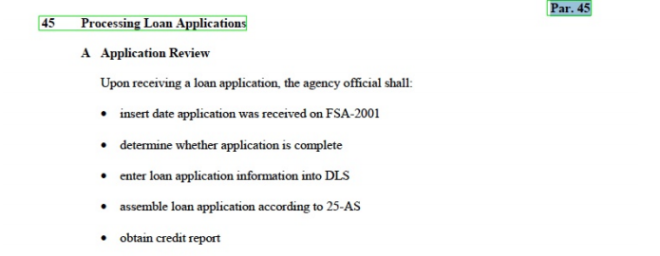
 Blue_French_Qtr