The Weak

The Weak

We’re a week away from the due date set by the court for the U.S. Attorney General to reply to the complaint as representation for the USDA. Unlike previously they’ve not called indicating their intent to request a further extension. Therefore, we anticipate some sort of response. None too soon after four months of waiting for a response our mental health grows weak.

The court did not and has not ruled on the Virginia State Attorney Generals’ offices’ Motion dismiss and claim of Sovereign immunity. Given our conundrum explained in the last post. A Legal Conundrum by Federal Rules of Civil Procedure 5(b)(2)(e)” We’re just not sure really what to make of their silence. I considered a motion for summary judgment but, that would negate a gross negligence charge, and eliminate the potential for discovery. We’d like to know Who, What, When, and especially Why?  By not providing a ruling the court is effectively delaying any requirement for a response. If the court considers the point mute, then we should expect default judgment for failure to respond to the complaint, and failure to set a hearing on the motion which is also not effective for failure to serve. Court Bias, Was all of the State’s move just a red herring to avoid responding to the complaint? Does that not deserve sanctions?  Did the court knowingly aid the State? Court Biased? 

It’s 19 degrees outside. The only heat we have is the fireplace. The temperature dropped to 2 last night. My daughter is complaining of being cold. No wonder in a house without, windows and doors, a finished roof, or insulation. A government agency, grossly negligent, incompetent personnel, fraudulent and criminal behaviors. People lost their jobs, businesses, and lives were destroyed; my daughter froze all because a Government agency wanted to deny a loan application because this unfinished self-built self-funded home is large.

What we allege are grossly negligent, fraudulent, criminal acts by Government employees and racketeering by Government agencies. The Government wants to claim sovereign immunity. We can’t be held responsible or accountable for breaches of the laws we enacted because we’re the sovereign and beyond reproach. The land of freedom and democracy with rights protected under the constitution unless, of course, the Government steals them?  Yes, America what a wonderful country, or is it one of tyranny and oppression?  Just what kind of response will the Department of Justice offer. What will the court do?  Regardless we will fight! For truth, honor, and justice – may the unbending sword of truth prevail.

Legal Conundrum by Federal Rules of Civil Procedure 5(b)(2)(e)

September 16,2013, A lawsuit was filed in which a defendant is the Project Director for the Virginia State Agricultural Mediation Program. Mrs. Wanda Johnson Consequently, this individual is represented by the Virginia State Attorney Generals Office by Katherine DeCoster.

October 15, 2013, The Virginia State Assistant Attorney General filed a motion requesting an extension of time to file an answer.

October 15, 2013, The Virginia State Assistant Attorney General filed a Notice of appearance.

October 18, 2013 The Virginia State Assistant Attorney General filed a motion to dismiss for failure to state a claim.

October 21, 2013, Court Granted the motion of time to answer the complaint.

October 22.2013, Court posted and sent Plaintiffs a Roseboro Notice.

October 28, 2013 After receiving the Rosboro Notice Plaintiffs informed the Virginia State Attorney General that the motions filed from October 15 – 18 had not been served.

November 8, 2013 Plaintiffs filed a response to the motion to dismiss for failure to state a claim by the deadline presented on the Roseboro Notice.

November 15, 2013 Virginia State Attorney General filed a reply to the plaintiffs response.

Since November 15, 2013 theres been no activity recorded on the docket. The court has not posted any ruling on the motion.

Here is this Pro-Se Civil procedure conundrum. The Federal Rules of Civil Procedure 5(b) Service How Made (2) Service in General. A paper is served under this rule by: (e)  sending it by electronic means if the person consented in writing—in which event service is complete upon transmission, but is not effective if the serving party learns that it did not reach the person to be served;

Plaintiffs never consented in writing to electronic service, The court told Plaintiffs  they would not be allowed access for electronic filings. The clerk of court stated that Pro-Se litigants were never given electronic filing access. We were however, informed we could make a motion to the court for access to electronic filing.

Since plaintiffs notified the Virginia State Attorney General on October, 28, 2013 of the failure to properly serve. Does that mean that none of the motions filed by the State Attorney General are effective and therefore, none of the courts rulings on those motions including the Roseboro Notice was valid?

The Federal Rules of Civil Procedure have been no help in understanding the impact of these facts. The Plaintiffs are left currently wondering if the court with knowledge of these facts is simply ignoring the motions for failure to properly serve? Should the plaintiffs motion for judgment for failure to respond to the complaint. Should the Virginia State Attorney General  have resubmitted the motions to the court. Should the State Attorney General be subject to sanctions. Should the Federal District Court Sanction itself?

We have no desire to see this case turn in any direction on some procedural technicality.  As Pro-Se Plaintiffs we hope the court will be lenient with us on procedural matters. We only want to see Justice, Honor, and Ethical behavior and application of the Law within accordance of statues and the constitution.   Lets hope we don’t try to find the depth of a rabbit hole.

Up-Date 4-21-2017 There is no end to the depth of this rabbit hole!

Dear ACLU of VA

Dear ACLU of VA

Dear ACLU,

I have tried for some time to get someone to take an interest in my legal challenges. I’m hoping since my case is all about Government corruption stealing the civil rights of the people, specifically the right to Due Process and the Right to equal justice under the law as well as challenging the Government’s sovereign immunity for violation of the laws of the sovereign and abrogating the judicial system the ACLU might have an interest in my case.

I believe I have standing, and substantial, hard, and circumstantial evidence to support the allegations; The USDA is operating an organized fraudulent racketeering operation denying individuals constitutional rights while usurping the judicial system to hide incompetent administration of the people’s resources and to manage legal risk expenses. I believe I can show how this is being done and provide the evidence to support the allegations, however, I believe in truly taking the actions that should be taken to shut down or fix the tyranny, oppression, and financial devastation on U.S. Citizens and to expose the depth of corruption in this illegal operation will take a great deal more resources than I will be able to supply alone.

I have filed a lawsuit in Federal District Court of Virginia Western District Case# 4:2013-CV-00054JLK claiming a RICO violation.  Multiple things have occurred with my case I perceive as prejudicial by the court. Giving me pause as to the Judicial interest in protecting the government in this matter.  I currently have been waiting 45 days for the court to rule on a motion by the State Attorney General to dismiss, ‘their involvement in the case ?’ I have taken this action Pro-Se and think it beneficial to keep that status, however, I want someone, an organization, or the media to take an interest, in this case, to ensure that justice prevails. Please feel free to review the case docket on pacer.gov or call and ask for any information.

Tens of Thousands of farmers have been ruined by this organization in the past. The organization has a decades-long history of civil rights violations, The process they have developed to mitigate the legal risk from these violations, in my opinion, is a fraudulent racketeering operation designed to allow members to commit crimes by hiding behind sovereign immunity to avoid responsibility or accountability for the corrupt incompetent administration of the people’s resources. They do this and smile while destroying the lives of those they are supposed to serve.

Can you help?

Thanks for taking the time to read.
Chris Julian
474 Orchard View Drive
Ararat, VA 24053

Christopher.b.julian@gmail.com
980-254-1295

Judicial Anticipation

So I filed a lawsuit Pro-Se? That means, I’m no Pro and could not afford a lawyer to take my case or find one I could afford. Trust me most wanted $200.00 an hour just to listen to my story. I had one wanting $ 800.00 an hour.  They say a Lawyer who represents himself has a fool for a client. What’s that make me? I’m no Lawyer.

Filling a lawsuit representing yourself is, let’s face it, scary!  Do you really have a case? Are you fooling yourself? Can you learn enough about the process to pull it off? The statistics would say NO!

In my case, the Government has done everything it can to cause as much financial duress going into this as possible. The process is designed to take forever. I believe the whole intention is to make it so painful and put you in such a bad financial situation you’ll just go away, or die of starvation trying. It took 12 months of administrative BS just to have their permission to take the case to Federal court. Oh and the whole issue stems from requesting a loan I was not eligible for, if I could have found credit elsewhere and their incompetent, untrained individuals denying the request, In our opinion fraudulently and illegally.

Now I have to say I  feel the gravity of my lawsuit makes my case that much more daunting. After all, I have alleged the USDA is running a racketeering operation and a Virginia State employee is an alleged participant. That puts me in Federal court challenging the  DOJ U.S. Attorney Generals’ office ‘The largest and most funded legal firm in the US and The Virginia State Attorney General. No competition there in my first ever hopefully only lawsuit of my life. I can’t pay my bills, feed my family, or Afford help and they’re funded with unlimited Government resources being used to rape the citizens they’re funded to help.

The last motion by the State attorney General had two valid questions to answer from our Pro se perspective. 1 Did the complaint state a claim upon which relief could be granted? 2. Would a state employee that completely abrogated their duty be allowed to escape suit with sovereign immunity?

I felt the first question was obviously no because there was no question plaintiffs had shown sufficient evidence to support a high plausibility of being able to prove a supportable cause of action. On the second question, it seems obvious that previous court rulings would not allow sovereign immunity protection where the State’s servants sidestepped outside their official duties and did not perform their function in the interest of the state. Why has the court not been able, or is it unwilling to rule on these questions?

The court gave me 21 days to respond to the motion “well sort of”. The State attorney got 7 days to reply to my response but, now the courts had 45 days to rule and still haven’t done so. Evidence court Bias Why is it taking the Federal court so long to rule?  Perhaps the ruling is more complex than we perceive. Perhaps the courts worried about the ruling? Or perhaps it’s as simple as they want to delay the ruling to manipulate the docket. See the U.S. attorney is due to respond to the allegations against the  USDA  on January 14, 2014. By delaying the ruling the State is getting a reprieve from having to respond to the complaint “I.e. If the rulings are in my favor they do not have to respond to the complaint until 14 days after the courts ruling” Do you believe the court would delay the ruling in order to put the responsibility of the State and the USDA on or about the same day?

The court’s failure to rule leaves the plaintiffs with a prolonged unanswered complaint. Worried about the court’s view of the merits of their case, Worried by the perceived bias of the court. Continued financial duress. The forced wait is just a mind fuck, intentional inflection of duress. Would you view withholding a ruling from a Pro Se to manipulate the docket for the benefit of State and Federal defendants as prejudicial?

If that’s what’s really going on then we should see a ruling in the last days of December. I would like to take bets on whether the Government answers the complaint or whether they motion again for some delay. No matter how any of this goes the outcome is serious and the questions of Government and Law very interesting.

Will the judicial system enforce Federal law on an agency of the U.S. Government?
Will the judicial system allow the Government sovereign immunity protection for racketeering! Just how will all this proceed through the court?
Will the court deny the suit because the FTCA requires getting the agency’s permission? But, we did not sue them for the torts. What will the court do about the clearly illegal acts committed by Governmental employees? What about the illegal acts we have yet to pursue in anticipation of eliminating reasonable doubt with discovery?

The mental, physical, emotional, and financial torture of me and my family sucks. However, we find the story unfolding fascinating, and yet with all the attempts to get media coverage we’ve been shown no interest. Why?  Does the media know something we don’t?

Do you think waiting for a ruling is emotionally taxing? How about when you represent yourself against the largest legal firm in the country defending the wealthiest nation on the planet?

4:2013 cv00054 JLK Judge Jackson L. Kiser presiding.

Today a special Warm Christmas Cheer!

Today a special Warm Christmas Cheer!

To: Congress and the Senate for the incompetent portions of Dodd-Frank requiring creditors to hold unsecured credit instead of real estate secured debt. To the SBA for being worthless! The USDA for crimes and criminal acts by their associates together with the administrative RICO Enterprise use stealing constitutional rights, avoiding accountability, and responsibility, usurping the judicial system hiding from the law with sovereign immunity. For stealing civil rights fair and equal justice, and due process. To Virginia State University Agricultural Mediation Program for their complete and utter dereliction of duty in handling our mediation request and failure to inform us they’d lost their mediation certification. To US Federal District Court for prejudice in favor of Federal and State governments. The Federal Judiciary has been unconstitutional, aiding and abetting Federal Government agencies with  Chevron Bias. To all of you! Thanks for your contributions to the destruction of Our Lives, Our Livelihood, Our Dreams, Our Marriage, Family, Sanity, and now 4 of my young daughters’ Christmas. For your Judicial Abuse, Failure to abide by your oaths of office, failing to uphold the constitution, failure to uphold the laws of this nation, and granting Government despotic repression over We The People. For our lost faith in humanity, Government, the power of the constitution, and Justice from the Judiciary. May each of you find your place in Hell much sooner than you thought!

CBS 60 Min Please tell our story

Dear CBS 60 minutes:

Our story is not a short story. In fact, it’s somewhat long and has many complex details. I’m no writer, however, we believe our story should be and needs to be told. Our story is relevant to the state of the union for it’s political, governmental, judicial, constitutional, and economic implications, and should be to the passage of any new farm bill. As I said, this is not a short story but one with many details somewhat complex and therefore, I will attempt to tell just the major facts and trust if our story is of interest we can provide all the details and evidence you would like.

Our story tells how Dodd-Frank, SBA, FSA, and USDA culminated circumstances to devastate the life savings of a couple who worked and saved for 20 years. How their efforts to begin a small business to provide jobs and to produce products have been destroyed by government actions. How during this journey they met with significant negligence, fraud, perjury, obstruction of justice, and multiple acts of what appears to be, and remain to be proven acts, of conspiracy to defraud by Federal and State agencies. How this journey lead to the discovery that the FSA has for decades been alleged to have discriminated against Blacks, Whites, Hispanics, Indians, and Women. That factually Congress has appropriated billions for settlement of these allegations over the decades. How now this organization is believed to be running a fraudulent legal risk mitigation effort under the guise of an administrative process abrogating the constitutional, and civil rights of the individuals they’re supposed to serve while allowing government employees to commit criminal acts and avoid accountability or responsibility for negligent and incompetent mismanagement of the people’s resources and they do so hiding behind and abusing governmental and,” individually qualified,” sovereign immunity. This enterprise is usurping the judicial system and whether they do so with or without judicial consent is in question. These findings have led this couple to file charges in Federal district court against Federal and State employees and Agencies for racketeering under the Racketeer Influenced Corrupt Organization Act. The case is on the Docket Federal District Court of Virginia Western District Case # 4:2013-CV- 00054 JLK Julian Et al Vs. Rigney Et al.

My wife and I decided in our late forties having just had our first and only serendipitous child to give up our corporate city jobs in banking and pursue life in a rural community. In 2007 we bought 23 acres just below the Blue Ridge Parkway and began developing it with intentions of starting a farm winery operation with rental cabins. We intended for our mothers to live with us and designed the main home with them in mind. Longer term we envisioned their quarters becoming a rental suite and beyond a space for us in our old age.

We had mortgage financing approved in 2007 but, because of delays in development by local government officials, a multitude of local labor factors, and a slow architect, the loan commitment expired in 2008. At the time the lending environment was deteriorating and some funding options fell through, true, we were able to secure another commitment but, not on terms, we found agreeable. We continued to finance our efforts out of pocket and looked to the SBA for some guidance and assistance.

Our initial meeting with the SBA left us discouraged with little guidance or assistance offered. Quite frankly we found the local SBA staff lacking in any knowledge or skills to offer which could be of assistance. This was a typical government pamphlet pushing office staffed with individuals unequipped to provide the services the agency boasted.

We gave new life to the old apple orchard on the property and in reporting crop information to the USDA discovered the FSA and their farm loan programs. We were not eligible for these farm loan programs because of a requirement for 3 years of farming experience.

Even with the banking industry in collapse, our own fortunes declined from bank stock holdings accumulated over years in the industry plus the turmoil in the stock market we weathered through the financial turmoil of 2008 and 2009 taking significant losses. We believed the economy would eventually turn and we continued funding our development efforts from our own financial resources. We believed at the time we would always be able to get an asset-backed loan on our real estate or mortgage the farm to complete our development plan.

From 2009 – 2012 we farmed the land built on the main house, and provided local employment and economic stimulus to a rural community. The farming suffered losses every year with the help of hail storms and ineligibility for crop insurance.  These losses we viewed as an investment in offsetting future profits. We had not started this to be in the apple orchard business but, with a plan to become producers of apple wine, hard apple cider, viniferous grape varietal wines, and a blend of the two.

In April of 2012, we realized to continue our operations and complete the development we would need financing. This entire effort had taken way too long, too many years, primarily because of local government officials and local labor issues. The fact is we came to see the environment as resistant to change and operating like a racketeering operation. We first approached multiple banks, farm mortgage lenders, and other mortgage lending sources. Every institution showed little or no interest in assisting us in any way. With over half a million invested in the real estate, equipment, and construction they had no interest in lending to us to complete our construction or develop our business. Every mortgage lender told us the same thing in 2011 the implementation of Dodd Frank Reg B prevented them from lending on our assets without an income to support the loan. Stated Income Evidence.

How were we supposed to manage the crews, provide the construction labor and management to complete the construction, manage and care for the farm operations, and hold down a full-time job?  We had invested our life savings in this real estate project, 5 years of our own labor and efforts to develop this property with the intention to start a small farm winery operation and now congress had enacted laws preventing us from leveraging our real estate assets to start and work for our own business.

Construction of our main residence was not to a point we could just stop. The 2012 apple crop was the first we had to survive spring hail storms and our first hope at being able to have a marketable crop that would provide the needed records to get crop insurance going forward. We continued our construction efforts and caring for the crop while we worked on a business plan and looked for ways to find financing.

In June of 2012, I happened into the local FSA office and saw the advertisements for Farm loan assistance. I contacted the regional FSA office for a beginning farmer farm loan application. When I read through the information It appeared from the requirements and the Farm Loan guide we should not have any issues with obtaining beginning farmers; farm loan. FSA was there to assist and promote beginning farmers who could not find credit elsewhere to develop their operations and assists them in getting to commercial credit viability. Given the requirements, I knew I did not have time then to prepare the information required and I wanted to get my 2012 crop harvested and sold before completing the application.  When I went to file the papers in my filing cabinet I discovered, I had requested and received an application in 2009.

We worked diligently through the summer and fall to care for, harvest, and market the crop and were putting in long days attempting to complete the framing of the 5200-square foot house and get it all under the roof before fall rains. We had been working for years on preparing the orchard for the planting of grapes and had it well positioned going into fall.

We continued looking for financing options and began working on a formal business plan we could present for SBA lending. We felt rather confident about our situation because of what we’d learned about the FSA loan program and worked through many of the application requirements. On the SBA website while researching SBA lending we found that given our operation involved a farm SBA would expect us to go through FSA first and so we focused on a beginning farmer, farm ownership loan.

On October 10, 2012, I met with a representative, on his recommendation, from FSA to review our farming operations. I provided him that afternoon with an application complete with the required financial information as of September 30, 2012. He told me during our discussions he would have to arrange for an appraiser to appraise the property and provide an after-capital improvement valuation.

On or about October 12, 2012, I received a confirmation letter from FSA acknowledging my application.  On or about October 23, 2012, I received a letter from FSA requesting further information. I phoned FSA on October 30, 2012, regarding 2 items on the request which were in the possession of the local FSA office. (Note Evidence UN Agenda 21) I sent the requested information in time to make the November 8, 2012, deadline. On November 13, 2012, I received a letter from FSA dated November 9, 2012, however, the envelope struck us as very strange because the postmark was October 22, 2012. The document was the second notice of incomplete application and this time requested some information we thought had been provided and some information that was not requested on the first listing of missing items. I called the FSA office that day but did not get an answer. I was very upset they had not asked for this information previously and the letter indicated the application would be dropped without any appeal option unless the information was received by November 19, 2013, this gave me just four days to retrieve the financial information and get it in the mail to meet the deadline. Were they then, going to find some other information they had to have?

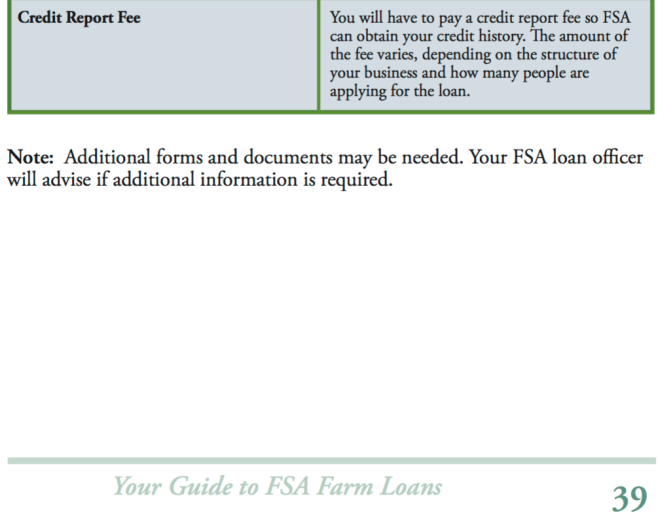
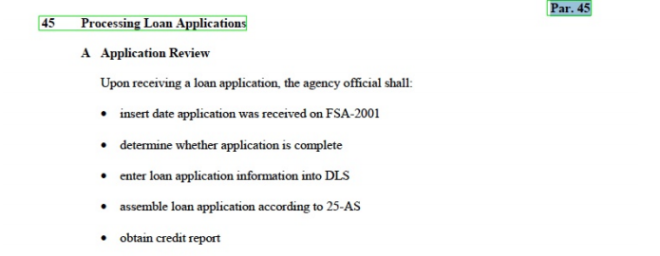
I sent the requested information with tracking to ensure it was in the office by the required date. On November 21, 2013, the day before Thanksgiving  FSA created and mailed a confirmation letter indicating our application was complete. This struck us as odd again we knew information we should have been asked to provide had not been requested. November 28,2012 one week after sending a completion confirmation FSA prepared and sent a Declination letter denying our loan application. The agency had never obtained a credit report, never done an appraisal, and never asked a single question about the application. The letter was negligently, prejudicially, and fraudulently, prepared with numerous fraudulent statements as well as multiple misrepresentations of fact and numerous factual inaccuracies. The letter was sent to us by certified mail and therefore by our estimation constituted mail fraud by an agency of the US Government.

The declination letter provided us with three options for opposing the decision.  A request for reconsideration, mediation, and administrative appeal. Given our experience with FSA up to that point, we choose mediation.

On December 10, 2012, we sent a request for mediation to the Virginia State University Agricultural Mediation Program. Lacking knowledge, experience, or understanding that our loan request had just taken a turn into a legal battle we provided the mediation program with our objections to the denial and pointed out the inaccurate and fraudulent nature of the denial letter.

From December 10, 2012, until January 7, 2013, we waited on a response from the program. Having received no response we contacted the Mediation Program Director at the University. We were given assurance our request had been received and that a mediation would be scheduled soon.

On January 24, 2013, having not been contacted a single time by the University Mediation Program, We took issue with the handling of our request with FSA in Washington. We learned then that the University was no longer certified to perform mediation for the USDA.

After a flurry of communications and issues, we had mediation scheduled by the North Carolina Agricultural Mediation Program. We requested FSA provide a copy of the credit report used in evaluating our loan application since we had paid a fee for them to acquire it.  On February 8, 2013, 50 days after creating the declination letter, FSA pulled a current credit report and presented it to us as the credit report used in our credit assessment. FSA delayed the mediation until February 27, 2013, now 3 months after declining our application.

Mediation was, as predicted by multiple advisers a waste of time, and we requested an administrative appeal promptly after the conclusion of mediation.

NAD scheduled a pre-hearing on March 19, 2013, one day prior to the due date set by the division for briefs to be delivered to the hearing officer. They railroaded pertinent rulings attempted on multiple grounds to intimidate us and ultimately denied us the due process in the presentation of our case. We were told an administrative appeal was not the forum for allegations of prejudice, negligence, fraud, or incompetence. They insisted we could only discuss the issues they wanted to be maintained.

In the pre-hearing and in briefs filed by FSA we were repeatedly badgered with false allegations claiming we made a request regarding our loan which we had never made. We refuted these allegations from the very beginning and consistently provided documentation that showed the allegations were false.

During the hearing, scheduled by NAD for April 17, 2013, 5 months after declination and one day prior to the statutory deadline an FSA employee testified under oath, he had conversations with us in which we made requests regarding our loan which we had never made. More interesting is before mediation which was after receipt of the declination we had never met this individual. Furthermore, The declination letter itself provided proof that these statements were false. Frankly, this individual, a Government employee of FSA was committing perjury and obstruction of justice in a formal Government hearing. While this was the only false testimony specifically about us, it was not the only incidence by FSA of perjury and false testimony during the hearing.

While the Federal court may disagree we found the NAD Hearing findings of May 16, 2013, to be nothing short of an attempt to cover up and avoid responsibility, and accountability, for multiple acts of negligence, fraud, and incompetence born from the negligent administration of a Government agency.   We further felt the decision had completely ignored all the supporting arguments we made and made no effort to provide any factual findings to support their decision. Additionally, the findings intentionally misrepresent the arguments made in our briefs and hearing.

We requested a Director review of the Administrative decision after preparing our argument on June 17, 2013, just within the deadline. We documented the many issues we had met with throughout the process. We provided further arguments to support our case and again found NADS decisions had completely ignored all the supporting arguments made and made no effort to provide any factual finding to support their decision. Furthermore, the Directors review stated we made arguments we had not made and were factually false! Again, the findings intentionally misrepresented the arguments made in our briefs and hearing.

On September 16, 2013, after some research, as the director’s review indicated we had exhausted our administrative appeal options and provided us no further appeal options, we discovered we had a right to Judicial review. Furthermore, we found judicial review could be incorporated with any other city of criminal action and we filed suit in federal district court against FSA, USDA, NAD, and the Virginia University State Agricultural Mediation Program director for racketeering. We believe that the Fraud, Mail fraud, perjury, and obstruction of justice met with, support the required precedence for such a suit. That the Federal and State employees involved were so negligent, fraudulent, and criminal as to have been derelict in their duties to warrant the Federal courts denying pleas for protection under sovereign Immunity.

We contend the USDA is running a risk mitigation program to protect the finances of the enterprise at the expense of the statutory, constitutional, and civil rights of individuals.  That factually the organization is perpetrating, administering, and running a racketeering operation. A fraudulent administrative process abrogates constitutional, and civil rights while allowing government employees to commit criminal acts and avoid accountability or responsibility for negligent and incompetent mismanagement of the people’s resources, and they do so by hiding behind and abusing governmental and,” individual qualified,” sovereign immunity. That they intentionally usurp the judicial system and are therefore guilty of tyranny and oppression. Furthermore, the processes they are manipulating are equivalent to torture, terrorism, and psychological rape.

While we’re happy to share extensive details and evidence related to specifics in our case. We would suggest the following articles as just a few of the many to reference in support of our story.

http://www.nrcs.usda.gov/Internet/FSE_DOCUMENTS/nrcs141p2_015583.pdf

http://deltafarmpress.com/white-farmers-suing-usdafsa

http://www.npr.org/templates/story/story.php?storyId=113730694

http://seattletimes.com/text/2017876971.html

http://www.marshacoleman-adebayo.com/women-whistle.html

http://www.ebony.com/black-listed/news-views/alabama-black-farmers-sue-usda-981#axzz2dehBlOEK

http://www.mcclatchydc.com/2013/04/09/188083/usda-hopes-to-settle-discrimination.html

Its time Congress abrogated these agencies off of the people’s purses permanently!

Capitalism, Democracy, Justice, and Civil Rights

Capitalism, Democracy, Justice, and Civil Rights

Capitalism, Democracy, Justice, and My Civil     Rights!

Blue Ridge Springs Orchard | By, CB Julian
November 18, 2013

Why is my story important to anyone? Because it’s about the failure of the American dream. The government’s involvement in destroying the dream, its potential, jobs, and rural and economic development. A dream that began failing at the hands of corrupt local officials and businesses, its destruction aided by Congress’s passage of Dodd-Frank, help denied from the SBA, and alleged illegal acts by government employees. When done by ordinary citizens these alleged torts have legal remedies. However, employees of the USDA and the University of Virginia State Agricultural Mediation Program have protection under sovereign immunity. In this case now in the Federal Court, we ask the court to decide if racketeering under the Racketeer Influenced Corrupt Organizations act ‘RICO’ by an agency and employees of the State of Virginia and the US Government can be absolved by Sovereign Immunity?

What makes this story relevant is the Government’s impediment to small businesses. The pain created by the mortgage mayhem, financial firms’ destruction of wealth, and how Dodd-Frank has been bad for those who had done everything right and now suffer because of the recklessness of others. Three decades of corruption in the USDA and how we allege the Government is abusing power to avoid accountability or responsibility for inept, negligent, corrupt management of the people’s resources. It’s about a difficult labor market and age issues, about whether the judicial system will truly render justice or protect corruption in the bowels of government.  It questions how the Department of Justice reconciles the irony of prosecuting citizens for crimes while defending with immunity government employees for the same offenses.  How all of this is stealing life, liberty, and happiness from my family and friends.

I never wanted to tell this story. I tried unsuccessfully now for some time to find a writer to do this for me. I really don’t have the time to be doing this at all, although, I still have hope the story ends well, and having written it down will help pander to some business success. Furthermore, I hope it will someday provide my young daughter with a picture of her parent’s trials in these difficult days. I don’t think much of my writing abilities. I find it hard work, and in the end, I never find I’ve done it well and I wish I had paid more attention to grammar in school. Over the last year, I’ve been relegated to doing much more of it, for reasons no one wants to have. I have the last year acted as my own attorney, attending mediation, pre-hearing conferences, and hearings, doing my own legal research, writing briefs, and presenting this case. Consequently, I’ve spent a great deal of time researching the law, writing briefs, and documenting facts to cross my t’s and dot my I’s. On September 16, 2013, I filed a lawsuit in the Federal District Court of Virginia, Western Division, as a Pro-Se plaintiff i.e. representing myself and my family.

This story spans most of the last decade but I would like to start with some of the most recent events. At the end of last week, I contacted the 4th circuit Federal court of appeals. I asked, how I might file a complaint against the court or judge?  I was quickly directed to this website
http://www.ca4.uscourts.gov/rules-and-procedures/judicial-conduct-disability. See Page 2 of Judicial Rules of Conduct.  It did not take much reading to tell the Appellate court is not interested in making complaints easy for the average citizen you should check it out. This is one of the most double-speak, most difficult-to-comprehend rules I’ve ever met. It’s as if to be intentionally stated, to be so confusing it cannot be understood. Just consider the fact stated by the site itself.  “Almost all complaints in recent years have been dismissed because they do not follow the law about such complaints.” Perhaps the court should consider whether it has anything to do with the ability of the average Joe to understand the complaint process?

I was able to glean two facts from the site. if you had a complaint it needed to be either about inappropriate behavior by the Judge or it needed to show he lacked the faculties to perform his duties. However, my complaint was neither. The best I could tell the court had not acted inappropriately and I have yet to meet the eighty-four-year-old judge.

My complaint is, as a Pro-Se plaintiff unfamiliar with the court’s regular character, I found repeated actions by the court I felt were prejudicial. To understand this you need a little background. First, the clerk’s office had informed us, that Pro-Se plaintiffs in a civil case were not given access to file electronically nor did the Judge ever grant them representation. Second, as mentioned above the defendants, in this case, are State and Federal employees and therefore, represented by the Virginia State Attorney General’s office, and the Virginia Division of the US Attorney generals office, an agency of the US Department of Justice.

We filed our complaint on September 16th, 2013, and waited to receive notice of the defendant’s representation, we expected them to respond to the complaint in 60 days. Did you know Government employees get almost 3 times as much time to respond to a complaint as a civilian?  On October 24th in the mail, we received a Roseboro notice from the court. Basically, this notice informs us, if we fail to respond, or reply with an issue outside the complaint it will be subject to summary judgment. Very interesting! What motion we’ve not filed, nor had we been served with any?  A quick check on pacer.gov the electronic system for case management reveals the VA State Attorney General has filed a notice of appearance, a motion to extend the time to respond, and a motion to dismiss the case and declare the defendant has sovereign immunity and the case should be dismissed. Now the thing is they did this and the court approved the motion to extend time, as well as, sent the Roseboro notice without us ever being served with the motions.

The State Attorney General had certified to the court we had been served electronically? However, the court and the clerk should have known this was not possible since they had told us we would not likely be granted access nor had we formally requested it. In the court’s defense, these filings were done electronically.

This then put us in a bind, and request an extension of time to reply, thus extending the defendant’s time to respond, do nothing, and ask it is dropped because of failure to serve even though the court had made us aware of its existence, or quickly try to respond appropriately, cover all the basics, and maintain the deadline to file an answer. So we choose the latter responding to the motion and delivering it on the last day the court gave us Friday, October 8th.

On Friday, October 8th the VA, US Attorney General files a motion to extend the time for Federal defendants to file an answer to January 14th, 2014, another 49 days of waiting. He properly served us and we got it in the mail Saturday as we were leaving town. I believed at the time I had 5 days to respond with an opposition. I should mention weeks earlier the assistant attorney general asked if I would object, and I informed him I would. The filing reflected this fact. Well, in this case, the court counts days beginning with the day after the filing and counts every day including holidays. This meant our response had to be in the clerk’s hand by Wednesday, Oct 13th. Monday was a holiday so how could we mail it and ensure it was received in the clerk’s office? Bias Note 1

I wrote the objection, and mailed everyone copies on Saturday night, but, I made the post office in Charlotte, NC at around 7:25pm, and the last pick up on the box was supposed to be 7:30 pm, holiday and all who knows for sure when it went out.

On Sunday, Oct 17th I sent the clerk’s office an email and asked if they could possibly let me know if the motion was received by Wednesday, and if not, I would drive to Danville to get it filed, in time for the deadline. I waited until about 1:00pm on Oct 19th for a reply from the clerk’s office, generally, they’re quite responsive to our questions. Well, not this time, I never did get an answer. That afternoon I drove to Danville to ensure my opposition got recorded in time. Mind you I believed at this point, I was a day ahead of the deadline. As I gave the motion to the clerk and explained they should ignore the one coming in the mail, I was handed an envelope by the clerk I had written the email, and it was the Judge’s order approving the US Attorneys’ motion to extend time. Bias Note 2 the motion showed we had an objection, but the court approved it without giving us a single day open at the clerk’s office to file an objection. Bias Note 2

A review of local court rules says the Judge can approve whenever he wants to and you need to file a motion to have any orders reconsidered. Once, again it was as if the court were giving preferential treatment and ignoring any objections we might pose outright.

From our perspective, the State Attorneys response’s were interesting as was the US Attorney’s filing notice of appearance after getting the motion approved and our contacting the Appellate court. As of today, we are awaiting the court, the decision on the State Attorney’s motion to dismiss and our objection thereto although, we would not be surprised to see the State motion for another extension after all the Government got one until January 14th, 2014. This will of course depend on the court ruling on their motion.